

Some arguments never die. In a relationship, the same issues often circle back again and again, resurfacing but never quite resolving. The same is true, apparently, for public land and mining disputes. Do we protect or do we use? Years go by and the same mining proposals come up again and again, never quite able to let go of the knowledge that mineral deposits reside somewhere under the earth, even if that somewhere is a pristine and wild place. Even when it seems that the local area and society at large has moved beyond the desire for resource grabbing.
This is the case with the Boundary Waters Canoe Area Wilderness and a proposed mine outside the Wilderness but within the region’s headwaters.
The Boundary Waters is a vast network of waterways along the Canada-US border that has over 1,100 lakes and 1,500 miles of canoe routes. It is known for moose, loons, bald eagles, and timber wolves. Anglers can expect walleye, smallmouth bass, and lake trout. This region also contains the largest area of uncut forest in the eastern United States. Near this pristine natural area is one of the world’s largest undeveloped mineral deposits. A nickel-copper mine within the Boundary Waters watershed would likely lead to a substantial amount of waste rock that would leach toxins and heavy metals into the surrounding groundwater. This would then contaminate the water in the nearby Wilderness.
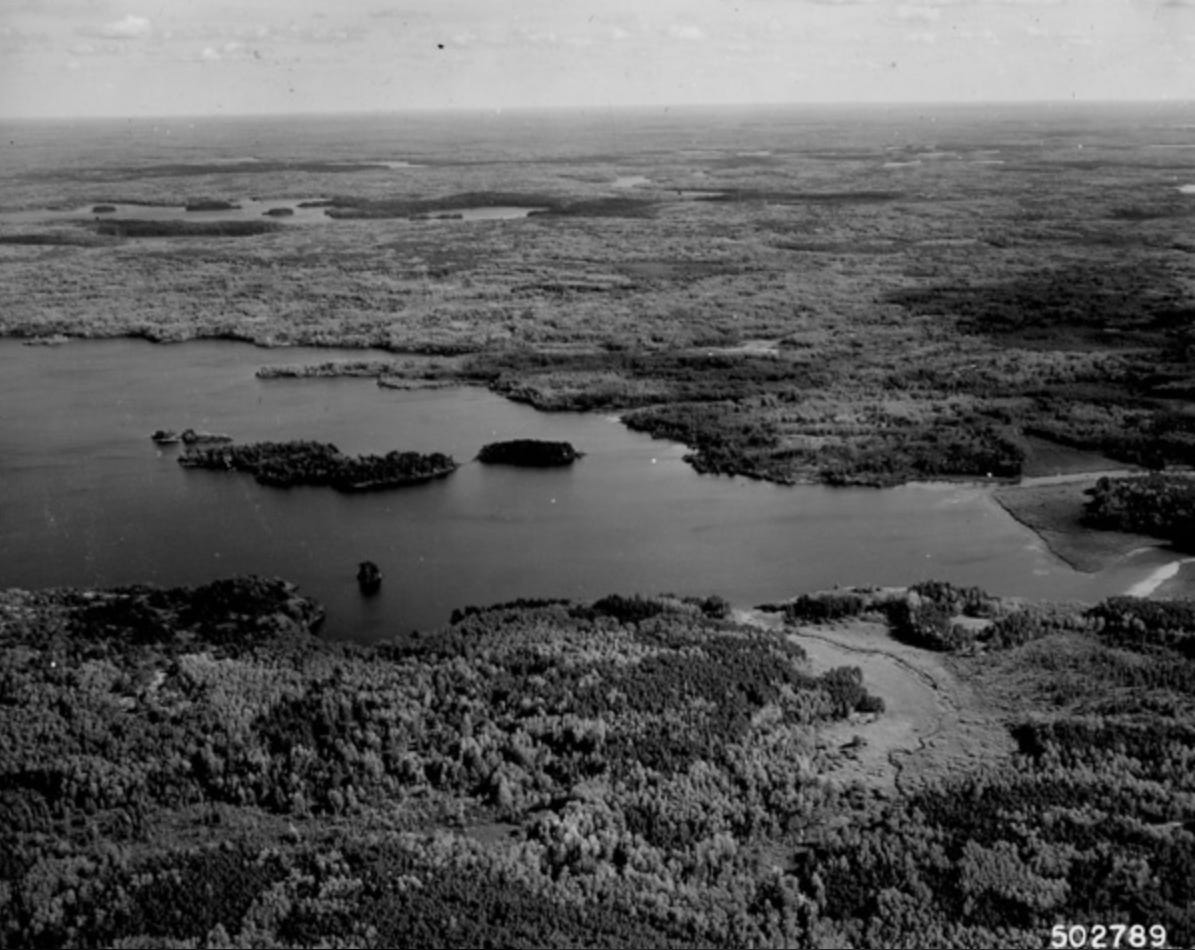
This is the country’s most visited Wilderness area. It is beloved by many. The Boundary Waters was issued protection with the signing of the Wilderness Act in 1964. The same law that defined and established the National Wilderness Preservation System in our country issued protection for the Boundary Waters by name. To me, that says that this area is the epitome of what federally designated Wilderness should be.
Just two years later the government issued two mining leases for 5000 acres of the Superior National Forest adjacent to the Boundary Waters Wilderness. So as far back as 1966, this mining vs. protection debate was happening. Then in 1978 the Boundary Waters Wilderness Protection Act was passed, which banned mining within the Wilderness and established a 220,000 acre protection zone around the boundary where mining was prohibited.
The passage of the 1978 Act didn’t come as easily as one would guess considering today’s rallying cry to protect the area. Many people in the region, especially business owners, opposed this act and thought it would hinder economic activity. One business owner I spoke with told me that when he publicly came out in support of the Wilderness effort, he was hung in effigy in the center of town.
But the Act did pass, the surrounding communities adapted, and a recreation-based economy thrives adjacent to the Canoe Area. Many people today would tell you that the Wilderness designation is a good thing for the region.
In 2012, a new company purchased the old mining leases, intending to build a copper-sulfide mine a mere five miles from the Boundary Waters Wilderness. In 2016 the mining lease renewal was denied by the Forest Service after determining that it would cause too much environmental damage. The next year the Forest Service applied to withdraw 234,000 acres near the Wilderness boundary from mining leases. During the public comment period 125,000 comments were submitted overwhelmingly against mining and in support of protecting of the area.
But in 2017, during President Trump’s first administration, the ban was canceled and the mining leases were reinstated. Continuing the back-and-forth, during the Biden administration the leases were again cancelled and a Public Land Order was issued in 2023 withdrawing more than 225,000 acres surrounding the Boundary Waters from mineral leases for 20 years.
Now this argument is being relived yet again. The second Trump administration is finding a way to circumnavigate the most recent protections by using the Congressional Review Act to reconsider it. There is a lot to say about using the CSA to rescind a Public Lands Rule, but I’m going to save that discussion for another time. For now the short story is: if this protection order is repealed under the CSA, another similar rule is not allowed to be put in place, meaning the protection of the area will be unable to yo-yo back, as it has been since the 60s. On January 21 the House passed this resolution.
This Land is a free newsletter and I want to keep it that way. It takes time, effort, and energy to write about public lands, and this time is rarely paid. If you feel inclined to show your support of my work, it would mean a great deal if you bought me a coffee.
It is unclear to me who, besides the pro-energy leaders of our government, want this and would benefit from it. The mining company interested in opening the mine is Chilean, meaning that the profits would largely go elsewhere. It does not seem that there is a lot of local interest in building a mine even if it did create new jobs in the short-term. In fact, many people rely on the Boundary Waters not just for solitude, canoeing, and fishing, but for their livelihoods as well.
A 2018 Harvard Economics study looked at the Boundary Waters and compared what would happen economically by allowing mining to take place or by withdrawing the area from mining activity and allowing the largely recreation driven economy to function as it has been. In a letter about his analysis to the Superior National Forest Supervisor, economist James H. Stock writes that mining “leads to a boom-bust cycle in all the scenarios we examine, in which the region is in the end left worse off economically than it would be under the withdrawal.”
I still believe some places should be able to exist as they are, aside from the economic benefits or trade-offs.
In the meantime, I got a permit to visit the Boundary Waters this summer. Quota season is May 1- September 30, and I’ve heard the permits go fast, so if you want to visit, reserve your permits soon. I still have a lot of details to figure out to make a trip happen (anyone up for a canoe adventure?) but I want to see this much-talked about, widely revered place. I want to experience the solitude, the silence, the starry nights. And I want to spend my money at local businesses, voting for a recreation economy the only way I know how.
This legislation concerning the fate of the Boundary Waters is with the Senate right now. I’ve read that it could go to vote early next week (February 9th.) If you have the time and the inclination, call your Senators and let them know how you feel about this issue. Ideally, tell them to vote no on H.J. Res 140. I found 5Calls.org to be helpful in finding my senators’ phone numbers and for proposing a potential script. While you’re at it, ask them to refuse to give ICE more money, too.
Hi McKenzie, Since I read your piece after the date to oppose the legislation about the Boundary Waters I couldn't register my opposition, I instead wrote to oppose the establishment of a detention center in my state of NH. I look for every opportunity I can to add my voice.
Thanks for another insightful informative piece. It inspires me to take action. It is sometimes difficult to get the stupidity of destroying our natural wonders and waters that support us all and future generations for the sake of a few bucks!